How to choose your clothing size online
A practical routine for comparing size charts, fabric and real try-ons before you order.
Start with the exact product’s size guide, compare your measurements, then use try-ons to understand the fit. A familiar size label alone is not enough.
Start with the product, not your usual size
An M on one garment does not tell you how an M from another brand will feel. Even within a brand, a relaxed shirt and a fitted shirt are intended to sit differently. Open the guide attached to the specific product and check the cut before choosing a size.
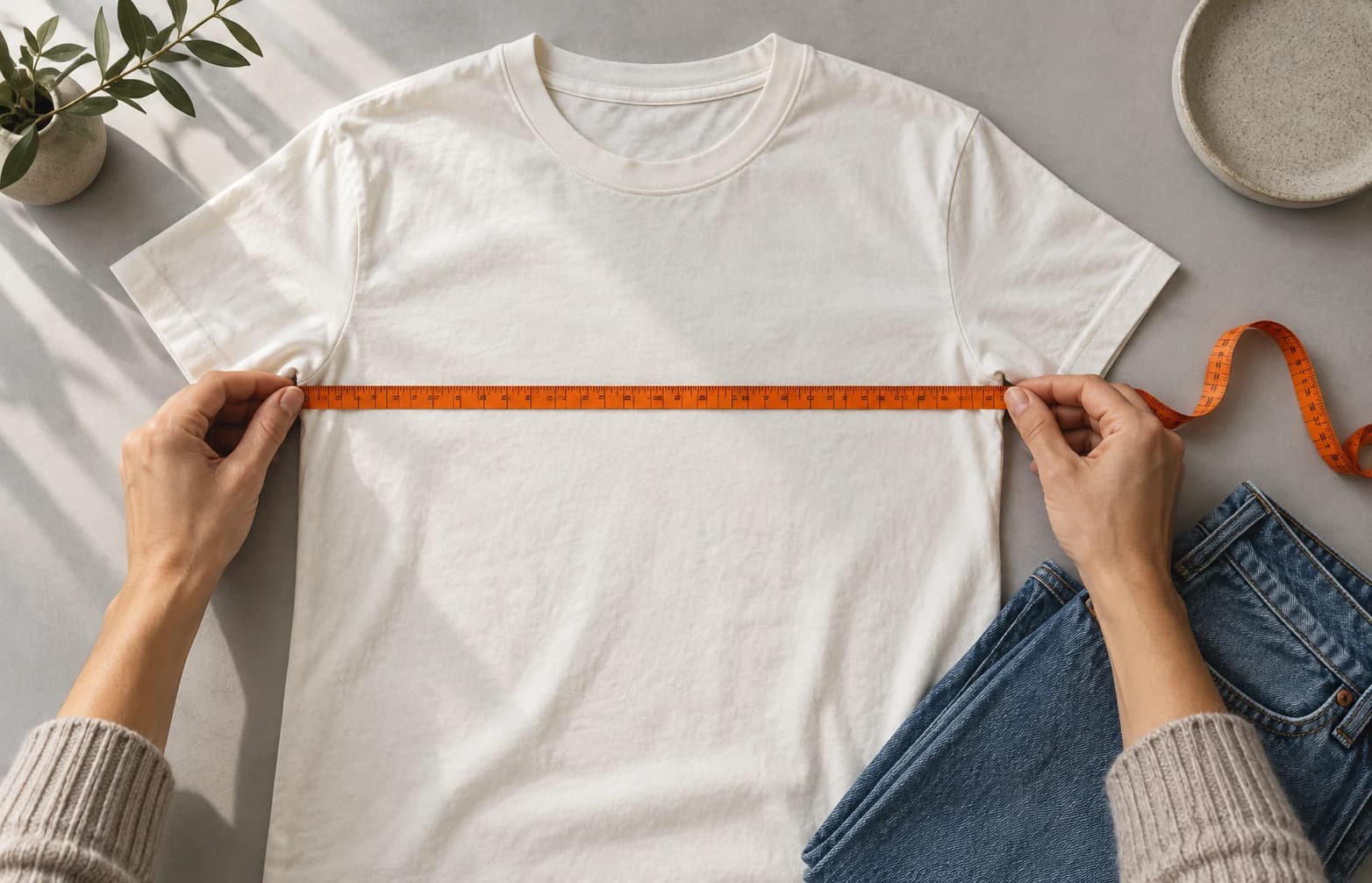
Look for the units and the market: centimetres or inches, EU or US, for example. Also check whether the table describes body measurements or the garment itself. Those are different things. If the guide is unclear, ask the retailer what its numbers refer to rather than guessing.
Compare the measurements that matter
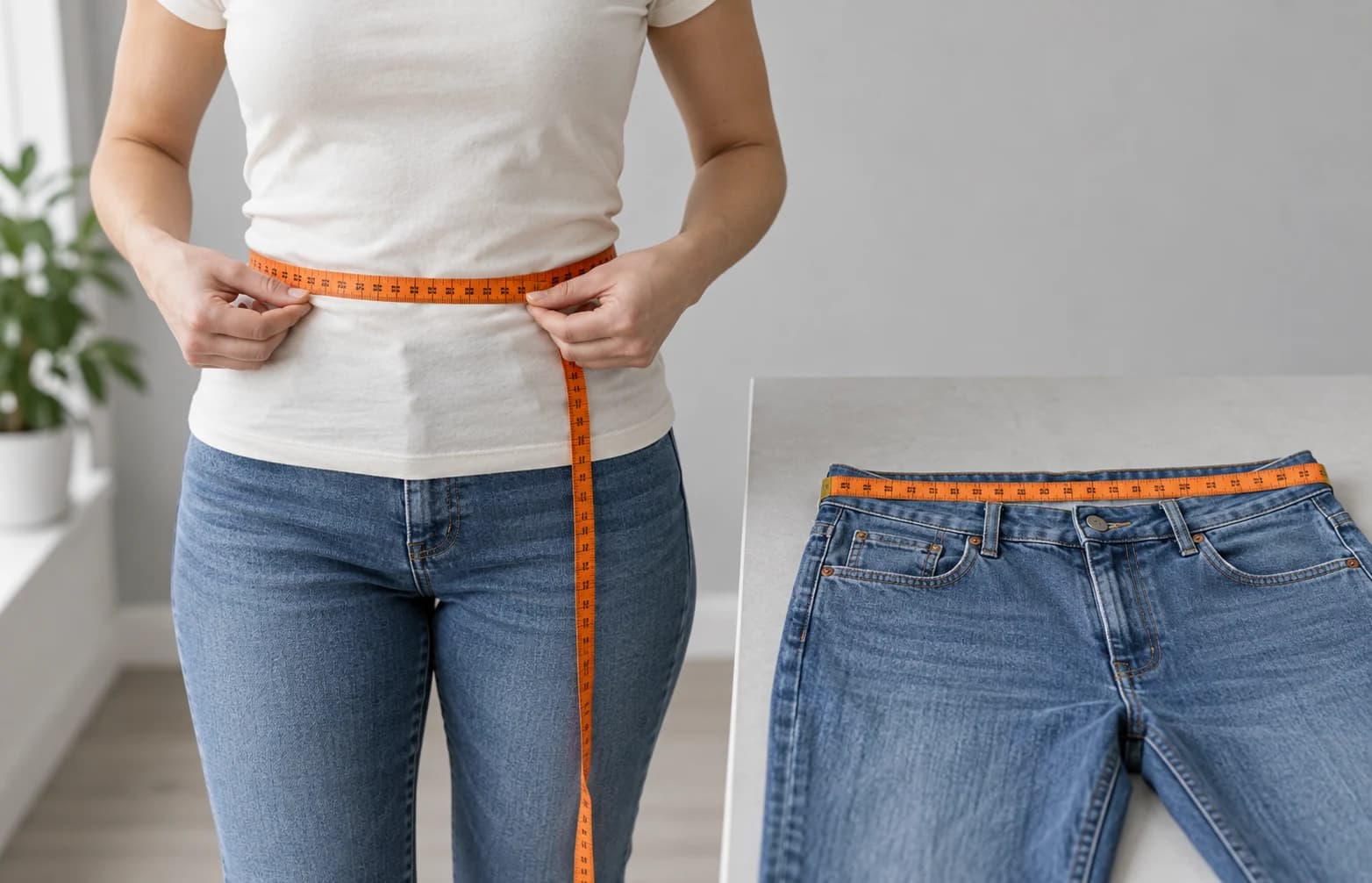
Use the retailer’s instructions to take your measurements. Keep the tape level and avoid pulling it tight. For trousers, pay attention to waist, hips and inside leg; for a fitted top, start with chest or bust and check shoulders and length where available.
Write down the date and units so you can reuse your notes without mixing inches and centimetres. You can also compare with a garment you already enjoy wearing, provided both garments are measured the same way.
Read the fabric and fit notes together
Stretch denim and rigid denim can feel very different at the same labelled size. Look for fabric composition, lining, rise and the intended fit. A fibre percentage alone will not tell you exactly how much a garment stretches.
If you fall between sizes, identify where you want room: sitting in trousers, reaching in a jacket or layering under knitwear. Avoid a universal “always size up” rule. The better choice depends on the garment and how you want to wear it.
Use real try-ons to fill the gaps
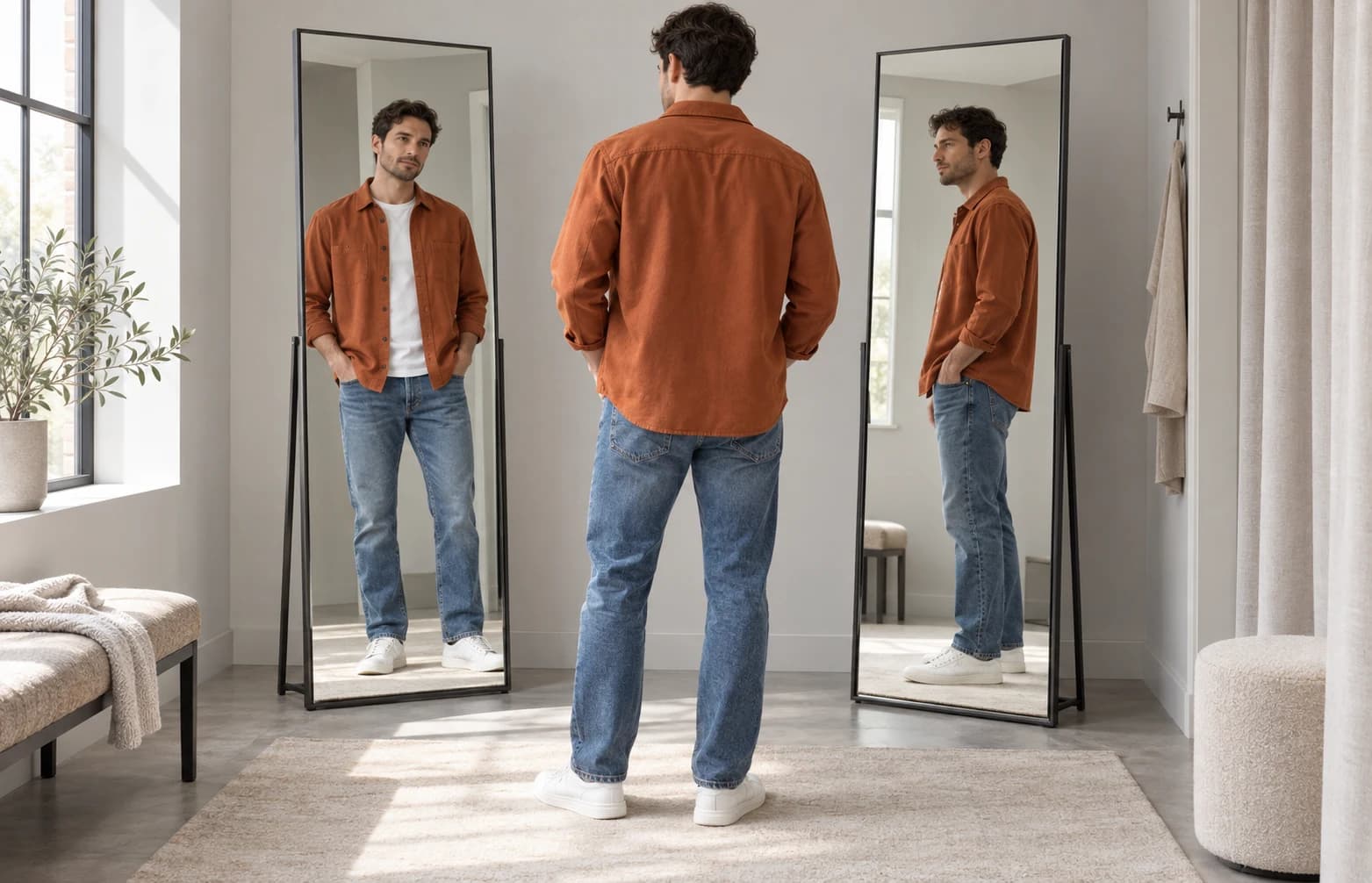
Find the same product where possible, with the size worn and clear fit notes. Someone with similar measurements can provide useful context, especially when they show the front, side and movement. Similar measurements do not guarantee identical proportions or preferences.
Before checkout, review the retailer’s current return conditions, including the deadline, costs and exclusions. If the chart and try-on evidence disagree, it is worth asking a question first. On Vicari, compare the available community try-ons; if the item is missing, you can make a request in the app.
Your quick checklist
- Check the exact product and size system.
- Compare like-for-like measurements.
- Consider fabric, cut and your preferred fit.
- Look for the size worn in real try-ons.
- Read the current return conditions.
See the fit behind the size.
Discover available try-ons from people with similar measurements in the Vicari app.
Explore the appSee the steps inside the app